 Happy Birthday TOXI
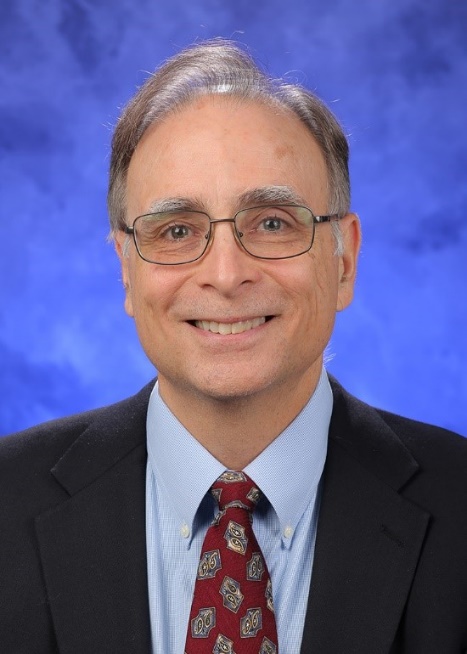 Message from the Chair
TOXI is celebrating 30 years as a Division.
In the spring, we had a Virtual Symposium: Pioneers and Protégés, Three Decades of Chemical Toxicology featuring pioneers Larry Marnett, Steve Hecht, and Fred Guengerich and protégés Jim Galligan, Christal Sohl, and Christie Sayes. The Symposium was recorded and will be available for viewing from our website in the coming months.
Speaking of our website (www.acschemtox.org), our Communications Chair, Linlin Zhao, received an ACS Communications Innovation Award, which he will use to revamp the site so that we can post more timely updates and archive our webinars, podcasts, and symposia — including this spring’s.
Our main event is the American Chemical Society Meeting this fall in Chicago, August 23–28. My thanks to Grover Miller for assembling an exciting program, which runs from Tuesday afternoon through Thursday morning. The schedule is full to the brim; for the first time in our history, we will run concurrent sessions. Please read the accompanying article in the Newsletter to see the full schedule. I want to highlight the following.
Our Keynote Speaker is Philip Demokritou (Rutgers University), who studies the mechanisms by which nanoscale materials interact with biological and environmental systems to impact human health.
Our Founders’ Award Winner is Kent Gates (University of Missouri), who studies how complex electrophiles damage DNA and how cells repair that damage. Kent was one of the founding brothers of TOXI, a member from the start and a close colleague of Dick Loeppky, our first Chair. Kent served as Program Chair and was on the Nominations Committee.
And congratulations to Shana Sturla (ETH Zürich), named a 2026 ACS Fellow — one of only 59 this year. Shana has served TOXI as a Member-at-Large, Program Chair, Chair, and was on the Nominations Committee. She is currently Editor of Chemical Research in Toxicology.
I’d like to point out that Shana is a scientific sister to me as we both were post-doctoral fellows in the lab of Steve Hecht, me at the American Health Foundation and Shana at the University of Minnesota. I mention this because our theme for TOXI’s 30th anniversary is Pioneers and Protégés — the story of how TOXI’s founders sparked exciting science and mentored new generations of leaders. We’ll be exploring this on our website over the coming months.
In celebration of TOXI’s 30 years, Chair-Elect Michael Trakselis has arranged a reception at Duneyrr Wine and Beer Company (6:30 pm to 8:30 pm) after the Rising Stars of Chemical Toxicology Symposium (2-6 pm). It is a 12 min walk from McCormick Place.
We’ll hold our Business Meeting at noon on Wednesday. I know these can be dull affairs, but lunch will be served. One item on the agenda: the TOXI ACS program. As you’ve seen, the fall meeting is changing in significant ways, and we’d like to hear whether members think we should move our main program to the spring meeting instead. The more voices, the better. If yo can’t attend, email me your thoughts (tes13@psu.edu). Also, this question will be on a survey that we will email to members this fall.
Thomas Spratt Pennsylvania State University,
Chair, Division of Chemical Toxicology
 ACS Fall 2026 Program Highlights
This year, the Division of Chemical Toxicology (TOXI) program expanded covered session topics through collaborative joint events with other Divisions. This approach makes sense given the broad inter-disciplinary quality of chemical toxicology. In a first, ACS set the timing of our schedule and other Divisions to put the whole ACS meeting in the Convention Center. This approach placed our sessions and those for other Divisions close to one another; however, that led to parallel competing TOXI sessions, making your planning more important. Please find the talks and sessions that interest you, so that you can take advantage of the variety of research areas covered by the Fall 2026 TOXI program. Lastly, we are celebrating 30 years of TOXI programming and want you to join us! After all, members like you have helped make our program so successful over the years.
Tuesday morning – History of TOXI and More
The Division of Chemical Toxicology (TOXI) will be kicking off an exciting program of science starting Tuesday morning, August 25th at 8:00 AM with a special joint session entitled In Celebration of 150 Years: Brief Histories of ACS Divisions. For that event, Dr. Amanda C. Bryant-Friedrich (Wayne State University) will be highlighting our TOXI history over the past 30 years.
Tuesday high noon – TOXI Executive Meeting
Tuesday afternoon – Trainee Research Highlights
Tuesday afternoon will feature a session entitled Rising Stars of Chemical Toxicology and be led by Drs Abdur Rahim (University of Minnesota) and Anal Jana (University of California-Riverside). This event will highlight the exciting achievements of our trainees in advancing research in a variety of areas.
Tuesday evening – Party time!
For this year’s social event, we are celebrating 30 YEARS of meeting together and talking about chemical toxicology. From the old guard to the newest recruits, please come join us to clink gasses and break bread as a member of our community that makes these meetings so special. The TOXI Reception will be held from 6:30 pm to 8:30 pm at the Duneyrr Wine and Beer Company.
Wednesday morning – DNA Damage, Plastic Toxicity or Foodie Future?
Wednesday morning kicks off with three sessions for attendees to check out.
1. One morning session is our Founders Award Session honoring Dr. Kent Gates (University of Missouri, see next section). He will present his significant contributions to the field of DNA damage and repair and recruited other leaders in his field to share their findings as well.
2. In parallel, Dr. Grover P Miller (University of Arkansas for Medical Sciences) organized a session with ENVR to cover Advances in Toxic Risk Assessments from Microplastics. Human exposure to microplastics is inevitable given its presence in the food chain, drinking water, and air, and yet the consequences of exposure remain poorly defined. This session includes speakers assessing the bioactivity and toxicological footprint of environmentally relevant “real-world” microplastics and identify potential health risks. Further, our keynote speaker, Dr. Philip Demokritou (Rutgers University), will wrap up the session discussing From Plastics to the Micro-Nanoplastics Crisis: Emerging Evidence, Risks, and Solutions.
3. Another morning session was a created from a joint effort involving the Divisions of AGRO, AGFD, ENVR, TOXI, and COMSCI to discuss the Future of Food & Agro. This session includes talks ranging from in depth understanding of plant biology to engineering plants and other food sources followed by an interactive discussion with invited speakers.
Wednesday high noon – TOXI business (you too!)
At noon, join us for the TOXI Business Meeting that is open to all. We will provide lunch present and share updates about our Division’s ongoing work and future plans.
Wednesday afternoon – Future of Chemical Toxicology
This afternoon is a continuation of our Founders Award session by looking back at how our prior honorees trained future leaders in chemical toxicology. Dr. Michael Trakselis (Baylor University) organized The Founder’s Legacy – The Next Generation of TOXI session that will highlight the achievements of the trainees on where they are taking the field now.
Wednesday evening – Posters!
The evening will be an opportunity to mingle, network, and talk science among the over 80 posters from TOXI and joint sessions with other Divisions.
Thursday morning – Awards, PROTACs, and MORE
1. With the Poster Session set for Wednesday night, we will award our top trainee presenters BEFORE the start of the morning session at a location to be decided.
2. We will again have parallel session this morning. One session will feature the topic Advancing PROTAC Drug Discovery: Bridging Medicinal Chemistry and PK/PD Modeling in collaboration with the MEDI Division. Drs. Nicolas Meanwell (NuArq MedChem Consulting LLC) and Fred Guengerich (Vanderbilt University) organized this exciting session on recent developments in the field from leading voices from both industry and academia.
3. In another room, Dr. Aaron Fleming (University of Utah) will lead a morning session on Hot Topics in Chemical Toxicology. This event will feature a fast-paced lineup of new ideas and research highlights that reflect the breadth of our field and the leaders making a difference.
We are excited about our vibrant and diverse program and the opportunity to engage with the TOXI community especially on our 30th birthday! We look forward to seeing you there!
Grover P Miller, University of Arkansas for Medical Sciences, TOXI Program Chair
Grover Miller, University of Arkansas for Medical Sciences
Program Chair, Division of Chemical Toxicology
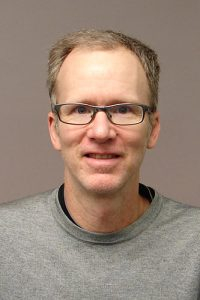 Founders Award Recipient – Kent S. Gates
Professor Kent S. Gates is the Schlundt Distinguished Professor of Chemistry at the University of Missouri–Columbia and an internationally recognized leader in chemical toxicology, medicinal chemistry, and DNA damage and repair. His pioneering research has transformed our understanding of how small molecules, including anticancer agents and environmental mutagens, damage DNA through novel bioactivation mechanisms involving reactive oxygen species and DNA-alkylating intermediates.
Among Professor Gates’ most influential discoveries is the identification of multiple DNA interstrand cross-links arising from endogenous abasic sites. This pioneering work paved the way for the subsequent identification of a previously unrecognized DNA repair pathway involving the glycosylase NEIL3. Together, these studies have significantly advanced our understanding of endogenous DNA damage, genome maintenance, and DNA repair.
Professor Gates is equally renowned for his dedication to education and mentorship, having trained more than fifty Ph.D. students who have gone on to successful careers in academia, biotechnology, and the pharmaceutical industry. His scientific leadership has been recognized through election as a Fellow of both the American Association for the Advancement of Science (AAAS) and the American Chemical Society (ACS), along with numerous awards for research and teaching excellence. He has also served in prominent editorial and leadership roles, including the Journal of Biological Chemistry, Chemical Research in Toxicology, and the American Chemical Society Division of Chemical Toxicology.
Through his groundbreaking discoveries, exceptional mentorship, and service to the scientific community, Professor Gates has made a lasting impact on chemical toxicology and continues to inspire future generations of scientists.
Ujjal Sarkar, Ph.D – AbbVie
Alternate Councilor, Division of Chemical Toxicology
Chair’s Corner
Lysenko, Kennedy, and the Capture of Science
In January 1943, in a prison in Saratov, the most accomplished plant scientist of his generation died of starvation. Nikolai Vavilov had spent his life solving the problem of hunger. He had built the world’s first great seed bank, mapped the geographic centers where humanity’s crops were born, and assembled a collection of seeds his colleagues would later starve to death rather than eat, guarding it through the siege of Leningrad. He died because his science had become politically inconvenient.
The man who arranged his ruin was Trofim Lysenko, an agronomist of modest training and immodest ambition who had discovered something more useful than data: he had discovered what Stalin wanted to hear. That discovery is the subject of this essay, because it is being made again.
The mechanism, not the madness
It is tempting to remember Lysenkoism as a story about bad ideas — an agronomist’s belief that wheat could be trained, like a Party cadre, to acquire new traits and pass them to its offspring; his rejection of Mendelian genetics and the gene itself as “bourgeois” fictions; his promise that the right treatment could make crops flourish where physics said they would freeze. The ideas were indeed false, and they failed in the field as falsehoods do.
But the ideas were never the dangerous part. What made Lysenko lethal was the fusion of his ideas with state power. At the August 1948 session of the Lenin All-Union Academy of Agricultural Sciences, Mendelian genetics was not merely criticized — it was abolished, declared a pseudoscience, struck from textbooks and laboratories by administrative decree. Geneticists were not merely outvoted; they were dismissed, arrested, in some cases executed. Vavilov was only the most distinguished of them. The Soviet Union did not lose its genetics to a better argument. It lost it to a personnel decision.
This is the lesson worth keeping, because the same pattern shows up again and again. Science is not fragile in its ideas, which are self-correcting over time; it is fragile in its institutions, which are human. Laboratories require funding that can be withheld. Findings require journals that can be discredited. Expertise resides in scientists who can be fired. A regime does not need to refute a discipline to destroy it. It needs only to decide who gets paid, who gets hired, and which conclusions are permitted in advance. Lysenko understood that truth, in a sufficiently centralized system, is whatever the budget says it is.
The American instance
Which brings us to the National Institutes of Health in the year 2026. The world’s largest funder of biomedical research now reports to a Secretary of Health and Human Services, Robert F. Kennedy Jr., who came to the post not from medicine or science but from a long public career attacking the scientific consensus on vaccines. Since his confirmation in early 2025 — a 52–48 vote in which the only Republican opposed was Mitch McConnell, a childhood polio survivor and the Senate’s former Republican leader — the agencies under his department have been remade with a speed that has no peacetime precedent.
The reorganization has shed roughly ten thousand staff on top of as many buyouts, collapsed agencies, and reoriented the department around a chronic-disease agenda while a proposed budget sought to cut NIH funding by tens of billions of dollars. Senior scientists have been pushed out, including multiple NIH institute directors and the FDA’s vaccine chief. Half a billion dollars in contracts to develop mRNA vaccines were cancelled. Hundreds of active research grants were terminated, many with letters declaring the work “antithetical to scientific inquiry” or harmful to Americans — a remarkable phrase to find on a notice killing peer-reviewed research. New rules increasingly weight grant decisions toward “alignment with administration priorities” rather than scientific merit, and a Schedule F mechanism has begun to convert career scientific posts into politically removable ones. A mural at NIH quoting Anthony Fauci on the promise of science was taken down.
All of this proceeds under a banner of reform. An executive order promises to restore “gold standard science”; the rhetoric is of cleaning up research that had grown rigged, captured, corrupt. This is not incidental. It is the most precise echo of all.
The parallel that matters
Lysenko did not present himself as the enemy of science. He presented himself as its liberator — the champion of a true, proletarian, practical biology against an effete establishment that hoarded prestige and produced nothing the people could eat. He claimed the mantle of science in order to dismantle it. The contemporary movement claims to be restoring rigor, transparency, and independence from corrupt interests even as it overrides peer review, purges expertise, and substitutes a leader’s convictions for the weight of evidence.
The structural signature is identical across both cases, and it is worth naming plainly. First, loyalty displaces competence as the criterion for who does science. Second, ideology is permitted to decide questions of fact in advance, so that conclusions are licensed or forbidden before the data are in. Third — and this is the tell — the capture is marketed as anti-corruption, the destruction of an institution sold as its rescue. Dissenting scientists are recast not as colleagues with evidence but as obstacles with agendas.
The scientist as scapegoat
If Vavilov is the archetype, the nearer example needs no translation. During the COVID-19 pandemic, Anthony Fauci — for nearly four decades the director of an NIH institute and the most visible face of the federal response — was made into something no healthy scientific culture should tolerate: not a colleague to be argued with but a personal enemy to be destroyed. He was not principally refuted; he was vilified. The evidence on masks, distancing, and vaccines was contested in the ordinary way, well and badly, but the campaign that carried political weight was aimed at the man. The threats against him grew serious enough to require an armed security detail; his family was harassed; “Fire Fauci” became a slogan and a fundraising line. A question that belonged to data had been relocated to the domain of loyalty, where what mattered was not whether he was right but whose side he was on.
None of this requires believing Fauci was right about everything; real questions do remain — about the origins of the virus and how forthcoming officials were with a frightened public. Those are arguments science must have. But the political machinery that has pursued him is not about having an argument. His security detail was revoked within days of the new administration; he needed a preemptive pardon to shield him from threatened prosecution; the sitting Secretary has floated a “truth commission” while congressional allies issue subpoenas and publish his private diaries. Whatever one finally concludes about the pandemic, this is the posture a state adopts toward a scientist who has become politically inconvenient — expertise recast as guilt, disagreement pursued as crime.
Where the comparison breaks — and why that matters
No American scientist has been imprisoned or shot for a finding. The courts function: a judge suspended the administration’s attempt to slash research overhead payments. The press reports freely, Congress holds hearings in which members of both parties have objected, journals continue to publish, and a vast private and philanthropic research enterprise lies beyond any one official’s reach. American federalism and the sheer decentralization of its science are real firewalls that Soviet biology never had. And the governing ideology here is not a single state doctrine like dialectical materialism but a looser populist suspicion of establishment expertise — incoherent in ways that may, paradoxically, limit its reach.
So this is not Stalin’s Russia, and saying so is not the claim. The claim is narrower and more unsettling: that the mechanism of capture — funding, hiring, and permitted conclusions concentrated in political hands, justified by the language of reform — is the same mechanism, operating earlier on its trajectory, in a system with stronger antibodies. Lysenkoism is not a description of where the United States is. It is a description of where this road, followed without resistance, has gone before.
What actually protects science
Lysenkoism ended. It ended because wheat does not grow on ideology, and no decree could make it. Soviet agriculture failed. The famines came, and after Stalin the discipline he had outlawed was quietly restored — decades late, having lost a generation of biologists and an incalculable amount of time. Reality is patient and it always wins. The only variable is the size of the interval before it does, and the number of Vavilovs crushed in that interval.
What shortens the interval is not the rightness of any single scientist but the resilience of the institutions:
- academic leaders who defend scholarship over political expediency,
- distributed funding that no one office can switch off,
- independent journals,
- tenure that lets a researcher follow data toward an unwelcome conclusion,
- international collaboration that routes around any one nation’s politics, and
- a professional norm that treats the suppression of inconvenient findings as the gravest betrayal of the work.
And the interval closes not by proclamation but by method. No inquisitor has ever settled a scientific question; only the experiment does. A hypothesis is put to a test, a result is replicated or it is not, a measurement is taken and taken again by someone who was never told what to find. This is why capture is always temporary: the moment a researcher runs the procedure honestly, the decree loses its authority over the answer. And the researchers do run it. In laboratories that keep their lights on through every political season — designing controls, chasing anomalies, submitting to the slow adjudication of peer review, building patiently on one another’s data — the work continues. It does not stop because a grant was terminated or a director was fired; it migrates, improvises, finds other funding and other journals, and keeps asking the one question that has always outlasted a Lysenko: what does the evidence actually say? That persistence — unglamorous, cumulative, and impossible to legislate away — is the deepest reason truth survives the people who try to command it. Reality supplies the verdict, but it is working scientists, running the method one experiment at a time, who force reality to speak.
Bibliography
- David Gorski, “Lysenkoism 2.0 in action: RFK Jr. abuses his power to bully journal editors over a retraction,” June 2026, Zhores A. Medvedev, The Rise and Fall of T. D. Lysenko (Columbia University Press, 1969)
- “NIH Grant Terminations Have ‘Frightening Implications’ for Science,” Inside Higher Ed, Mar 2025
- ProPublica, “Science Shattered” — https://projects.propublica.org/nih-cuts-research-lost-trump
- Kozlov, M. & Ryan, C. “How Trump 2.0 is slashing NIH-backed research — in charts.” Nature 640 (8060), 863–865 (2025). Published online 10 April 2025. doi:10.1038/d41586-025-01099-8 — https://www.nature.com/articles/d41586-025-01099-8. : https://media.nature.com/original/magazine-assets/d41586-025-01099-8/50851216
- D.F.M. Oliveira, Q. Huang, T.K. Woodruff, & B. Uzzi, How the 2025 NIH grant terminations varied by researchers’ demographic groups, Proc. Natl. Acad. Sci. U.S.A. 123 (13) e2527755123, https://doi.org/10.1073/pnas.2527755123 (2026).
- Patel VR, Liu M, Jena AB. Clinical Trials Affected by Research Grant Terminations at the National Institutes of Health. JAMA Intern Med. 2026;186(1):126–128. doi:10.1001/jamainternmed.2025.6088
- “Trump revokes security detail for Fauci,” Fox News, Jan 24, 2025
- Biden preemptive pardon of Fauci, Jan 20, 2025 (widely reported)
- “RFK Jr. Calls For Truth Commission To Hold Anthony Fauci Accountable,” Daily Caller, June 2025 https://heartlandernews.com/rfk-jr-calls-for-truth-commission-to-hold-anthony-fauci-accountable/
- Halpert, M & Matza M. “Anthony Fauci refuses to answer questions during tense US Senate hearing about Covid origins”, https://www.bbc.com/news/articles/cdx85vkk0gko
Thomas Spratt Pennsylvania State University,
Chair, Division of Chemical Toxicology
ACS Highlights from 25 Years of TOXI—Molecules, Mechanisms, and Mission
The American Chemical Society is putting together a book that highlights the past 25 years of Technical Divisions. Here is our story.
Molecules, Mechanisms, and Mission
Growth and Discovery in the
ACS Division of Chemical Toxicology (TOXI)
ACS 150th Anniversary Commemorative Essay • 2002–2026
A Division Built on Chemical Mechanisms
The ACS Division of Chemical Toxicology (TOXI) held its inaugural symposia at the 1996 National Meeting in Orlando, filling a genuine gap in the Society’s scientific landscape. While ACS divisions addressed organic chemistry, biochemistry, medicinal, and environmental chemistry, no dedicated forum existed for scientists whose primary focus was the molecular mechanisms by which chemicals damage living systems. Richard N. Loeppky, whose work on nitrosamine carcinogenesis had brought this absence into sharp relief, founded the Division to unite chemists and biochemists committed to asking not merely what is toxic, but why, and how at the molecular level.
The founding leaders deserve recognition. Lawrence J. Marnett served as the Division’s first Secretary and Treasurer for eleven years while simultaneously founding and editing Chemical Research in Toxicology (Chem Res Toxicol). Stephen S. Hecht served as first Program Chair and later became the second Chair. Together, Loeppky, Marnett, and Hecht established the intellectual standards and organizational foundations on which everything that followed was built. By 2002, the Division had already established itself as an intellectually distinctive home: one that asked not merely what is toxic, but critically why, and precisely how at the atomic and molecular level.
The years 2002–2026 represent the Division’s period of full scientific maturity. Membership grew from a few hundred dedicated researchers into a community of more than 1,400 scientists spanning academia, industry, government agencies, and regulatory bodies. That breadth reflects the reach of the field itself: TOXI members bring expertise in mass spectrometry, synthetic chemistry, structural biology, enzymology, computational modeling, proteomics, metabolomics, molecular epidemiology, and bioanalytical chemistry to bear on shared questions about how chemicals damage living systems and how those systems respond.
Milestones and Programmatic Achievements (2002–2026)
Central to TOXI’s identity has been its stewardship of Chem Res Toxicol, the primary publication venue for mechanism-focused toxicology since 1988. The journal has been guided by three editors: founding editor Marnett, followed by Hecht, and currently Shana Sturla. In 2022, the Division celebrated the journal’s 35th anniversary with a virtual symposium honoring Marnett’s founding contribution. Chem Res Toxicol today carries an impact factor approaching 4.0, holds Q1 status in both Toxicology and Chemistry, and maintains an h-index of 183.
The Founders’ Award, established in 2008, has become one of TOXI’s most celebrated traditions. Each recipient delivers the Richard Loeppky Lecture and organizes a National Meeting symposium in their honor. Awardees from 2008 through 2025 — Lawrence Marnett, Stephen Hecht, Richard Loeppky, F. Peter Guengerich, Thomas Baillie, Steve Tannenbaum, Paul Hollenberg, Arthur Grollman, Nicholas Geacintov and Suse Broyde, Ian Blair, Judy Bolton, Trevor Penning, Pete Dedon, John Essigmann, Cynthia Burrows, Yinsheng Wang, Amanda Bryant-Friedrich, Shana Sturla, and Kent Gates — have collectively defined the mechanistic landscape of chemical carcinogenesis, DNA adduct formation, oxidative stress, drug metabolism, and DNA damage and repair.
The Chem Res Toxicol Young Investigator Award provided critical recognition for early-career scientists whose work showed exceptional promise. Early recipients such as Sturla, Yinsheng Wang, and Penny Beuning went on to assume sustained leadership roles within TOXI, demonstrating that the award has functioned not merely as recognition but as a launching pad for long-term Division leadership.
National Meeting programming has continuously evolved to reflect scientific advances and emerging public health priorities, encompassing DNA damage and repair, reactive metabolites, environmental carcinogens, tobacco-specific nitrosamines, oxidative stress, epigenetic modifications, and drug-induced organ toxicity. A joint session with MEDI on Drug-Induced Liver Injury, led for 20 years by researchers from Vanderbilt (Fred Guengerich) and Bristol Myers Squibb (Nicholas Meanwell), exemplifies the Division’s commitment to bridging academic discovery and translational application.
The Annual Spring Virtual Symposium, launched during the COVID-19 pandemic and sustained as a permanent fixture, democratized access for members and students unable to attend in-person meetings. The establishment of ACS-IndiaTox further extended this global reach, culminating in an inaugural in-person conference in India in fall 2024 — a concrete demonstration of the Division’s recognition that chemical toxicology is a global challenge requiring a global scientific community.
Scientific Themes Defining the Era
The scientific agenda of TOXI from 2002 to 2026 was shaped by interacting technological revolutions and public health imperatives. The maturation of high-resolution mass spectrometry — capable of identifying and quantifying DNA adducts, protein modifications, and metabolites at femtomolar concentrations — transformed the Division’s analytical repertoire. Methods pioneered by TOXI members for adductomics opened new windows into how tobacco carcinogens, environmental pollutants, endogenous reactive species, and therapeutic drugs alter DNA.
Tobacco toxicology remained a focus throughout. TOXI members made foundational contributions to understanding the chemistry, metabolism, and DNA-damaging properties of tobacco-specific nitrosamines NNK and NNN, polycyclic aromatic hydrocarbons, and reactive aldehydes in cigarette smoke. As electronic cigarettes emerged as a major public health phenomenon in the 2010s, Division researchers were among the first to characterize e-cigarette aerosols, identify novel toxicants including acrolein and propylene glycol oxidation products, and assess their capacity to form DNA adducts and induce cellular stress — positioning TOXI scientists as authoritative voices in regulatory conversations about nicotine products.
Computational approaches rose to prominence alongside experimental work. QSAR modeling, molecular dynamics simulations of carcinogen-DNA adduct conformations, toxicogenomic pathway analysis, and machine learning for reactive metabolite prediction became integral to how Division members framed research questions. Joint symposia with Biochemistry and Chemical Biology (BIOL), Environmental Chemistry (ENVR) and Chemical Information (CINF) reinforced TOXI’s interdisciplinary reach across the broader ACS community.
A Living Intellectual Lineage: The Leaders of TOXI
One of TOXI’s most striking features across its thirty-year history is its intellectual genealogy — a mentorship chain connecting the Division’s founders to its present stewards.
Richard Loeppky, the founding Chair, set the tone through his work on nitrosamine chemistry. Stephen Hecht built one of the most productive programs in tobacco carcinogenesis and mentored future leaders including Shana Sturla and Thomas Spratt. Neil Castagnoli brought expertise in neurotoxic nitrogen compounds and mentored Lisa Peterson, a future Chair. Gerry Wogan’s contributions to aflatoxin biology helped define the Division’s mechanistic paradigm, a tradition extended by John Groopman, a subsequent Chair, through his work on aflatoxin biomarkers and molecular epidemiology.
F. Peter Guengerich represents the most connected node in this network. His foundational contributions to cytochrome P450 biochemistry were matched by his mentorship of two subsequent Chairs — Lisa Peterson and Dan Liebler — making him a generational anchor of Division leadership. Trevor Penning, trained by Paul Talalay, contributed decades of scholarship on PAH metabolism and aldo-keto reductases. Nicholas Geacintov’s structural studies of PAH-DNA adducts shaped understanding of mutagenesis and repair across the entire era.
Natalia Tretyakova, trained by James Swenberg and Steve Tannenbaum-early contributors to TOXI, brought exceptional mass spectrometry expertise to the Chair role. Sturla, mentored by Hecht, developed innovative approaches interrogating how DNA damage leads to mutations. Mike Stone and Thomas Spratt continued this trajectory through structural and mechanistic studies of DNA damage and repair. Chair-elect Michael Trakselis, working at the interface of DNA replication and repair, stands ready to carry this lineage into TOXI’s fourth decade.
This succession — bound by mentorship and shared scientific commitments — is among the Division’s most enduring achievements.
Looking Forward
TOXI commemorates its 30th anniversary at the 2026 ACS National Meeting in Chicago at a remarkable scientific juncture. Tools ranging from single-cell omics and cryo-electron microscopy to AI-driven chemical space exploration and organ-on-a-chip systems offer unprecedented power to interrogate chemical-biological interactions at every level of organization.
Emerging exposures — microplastics and their chemical additives, PFAS, nanomaterials, and aerosol mixtures from next-generation nicotine and cannabis products — demand exactly the mechanistic, chemistry-first approach that has always been TOXI’s hallmark. The integration of AI and machine learning into toxicological prediction and chemical safety assessment represents both opportunity and responsibility; TOXI’s tradition of pairing experimental chemistry with quantitative analysis positions it as a natural partner in the transition toward new approach methodologies that reduce reliance on animal testing.
The launch of ACS ES&T Toxicology — a new journal sitting at the intersection of environmental and human health, integrating chemistry with chemical risk assessment, ecology, public health, and epidemiology — signals growing recognition across the scientific community that mechanistic toxicology is indispensable to addressing planetary health challenges. TOXI and its flagship journal Chem Res Toxicol are well positioned to engage productively with this broader ecosystem.
TOXI’s growing international reach through ACS-IndiaTox and the virtual symposium program positions the Division toward a truly global scientific community. Chemical exposures do not respect national borders, and nurturing those international connections will be among the Division’s most consequential contributions in the years ahead.
The Division of Chemical Toxicology was founded on the conviction that understanding the molecular mechanisms of toxicity is not merely an academic pursuit — it is the scientific foundation on which rational approaches to human and environmental health must be built. That mission has always demanded discipline: all advances must remain grounded in the two pillars of toxicology — hazard identification and risk assessment — keeping findings anchored in biological and human relevance. Without this discipline, even the most elegant mechanistic chemistry risks misdirecting public health concern. TOXI enters its fourth decade with that founding conviction intact, its scientific community vibrant, and its relevance to 21st-century challenges greater than ever.
 Heroes we lost
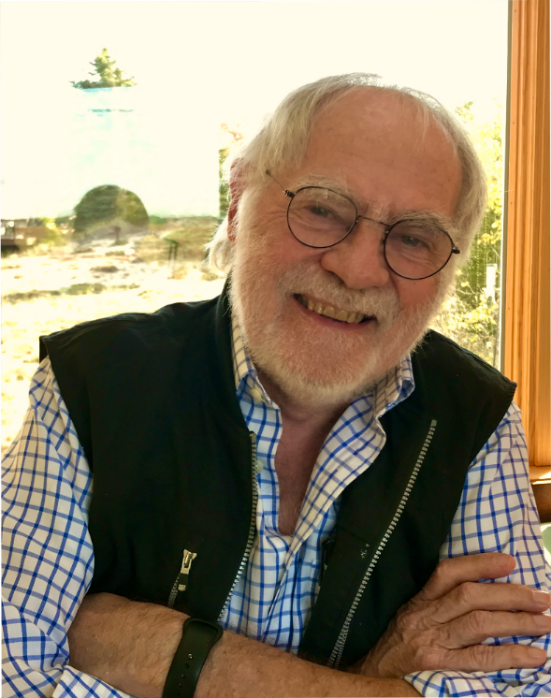
A Memorial Tribute to John S. “Pete” Wishnok (1938–2026)
John S. “Pete” Wishnok passed away on March 14, 2026, in Newburyport, Massachusetts, following a prolonged illness. Born in Titusville, Pennsylvania, in 1938, he earned a B.S. in Chemistry from the College of Wooster and a Ph.D. in organic chemistry from Brown University, followed by postdoctoral studies at Princeton University and a faculty appointment at Boston University. In 1974, Pete joined MIT, where he spent more than four decades as a distinguished scientist, educator, mentor, and colleague before retiring as a Senior Research Scientist.
Pete made pioneering contributions to biological mass spectrometry, chemical carcinogenesis, molecular dosimetry, and nitric oxide biochemistry. As Director of the Wishnok/Tannenbaum Mass Spectrometry Laboratory, he developed sensitive analytical methods to measure DNA damage, protein modifications, biomarkers of carcinogen exposure, and products of oxidative and nitrosative stress. His 242 scientific publications helped establish mass spectrometry as an essential tool for understanding environmental exposures, disease mechanisms, and cancer risk.
Pete was equally valued as an educator and mentor. For more than thirty years, he led MIT’s Bioengineering and Toxicology Seminar, helping graduate students become stronger scientists and communicators. In 2015, the department established the BATS Wishnok Prize in recognition of his extraordinary dedication to graduate education. Students and colleagues remember his encyclopedic knowledge, thoughtful critiques, patience, humility, and willingness to share his expertise.
Outside the laboratory, Pete was an accomplished musician who played guitar, banjo, piano, and harmonica. He was also a gifted photographer with a particular interest in modern dance and enjoyed the arts, travel, cooking, and the community he shared with his longtime partner, Judith Chaffee, on Plum Island. Friends and family remember him as kind, gentle, funny, intellectually curious, and deeply patient.
Pete is survived by Judith, his partner of forty years; his daughters, Lisa and Nina Wishnok; his sister, Constance Phillips; and the many students, colleagues, collaborators, and friends whose lives he enriched.
Pete’s legacy resides not only in his scientific contributions but also in the countless people he taught, mentored, and inspired. He will be remembered as a scientist of integrity, curiosity, generosity, and humanity, and he will be greatly missed.
Contribution by Steve Tammenbaum and Peter Dedon MIT
TOXI Story Time – From Moldy Hay to Medicine
In the 1920s, farmers across the northern United States and Canada faced a puzzling problem: apparently healthy cattle were dying from uncontrollable bleeding. The common connection was spoiled sweet-clover hay.
At the University of Wisconsin–Madison, biochemist Karl Paul Link and his colleagues investigated the mystery. In 1939, they isolated dicoumarol, an anticoagulant produced when coumarin in sweet clover interacts with certain molds. The researchers subsequently synthesized more than 100 related compounds.
One compound—known initially as “analog 42”—was particularly effective at killing rodents. It was named warfarin by combining “WARF,” for the Wisconsin Alumni Research Foundation, with part of the word “coumarin.” Warfarin entered the market as a rat poison in 1948.
The surprising twist came when researchers determined that a modified, carefully controlled formulation could safely prevent dangerous blood clots in humans. Warfarin sodium was approved for medical use in 1954. Its reputation received an additional boost in 1955, when President Dwight D. Eisenhower was treated with warfarin following a heart attack.
Thus, an investigation that began with bleeding cattle and moldy hay produced both a pesticide and a lifesaving medication—a memorable demonstration that toxicity depends on dose, formulation, biological context, and intended use.
Source and further reading: The Invention of Warfarin—ACS National Historic Chemical Landmark
Gunnar Boysen, University of Arkansas for Medical Sciences
TOXI-Newsletter editor